
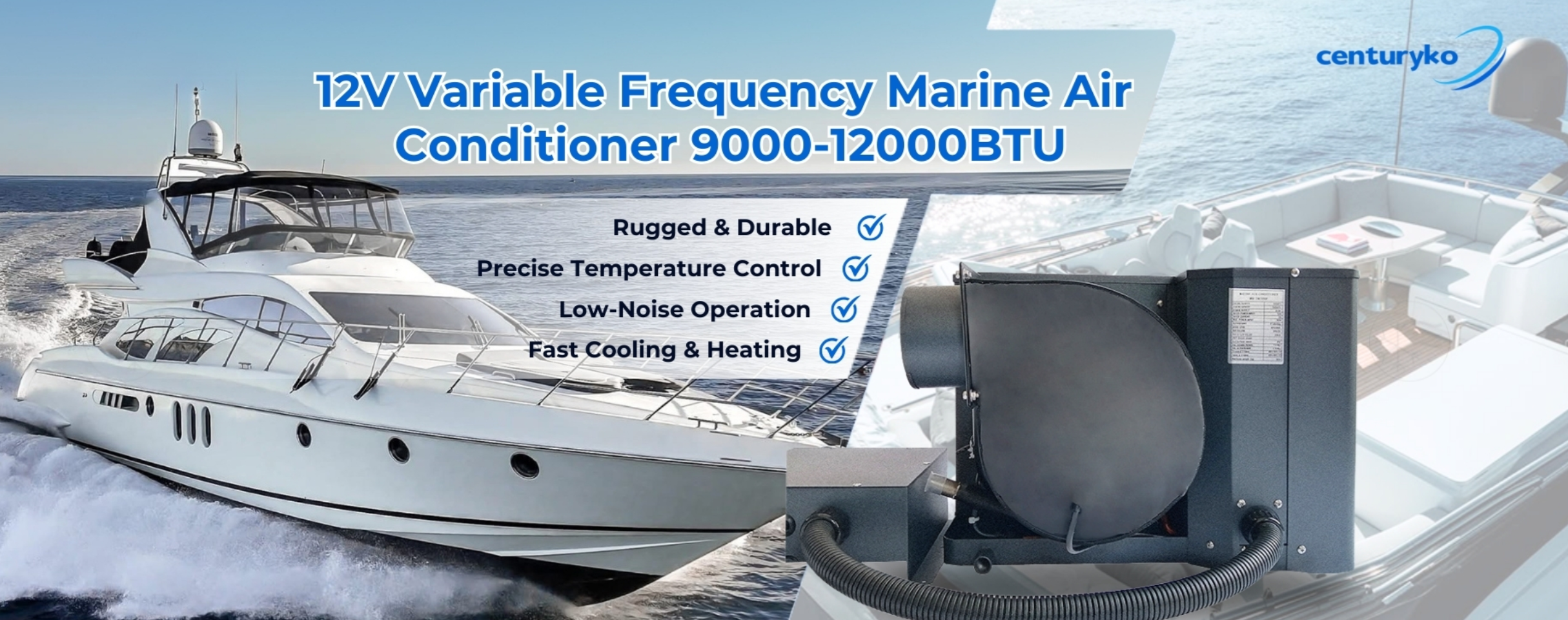
Why getting the size right matters for you on deck
When you’re picking a system for a cabin, it’s not glamour—it’s survival. A portable marine air conditioner that’s too small won’t keep humidity and heat at bay; too big and it cycles constantly, wasting power and beating up the compressor. If you’re browsing options, compare portable marine air conditioners with larger marine air conditioning units early on so you understand trade-offs between portability, condenser capacity and installation footprint. In real summers—think Sydney and Brisbane, where on-deck temperatures commonly top 30°C—boats need realistic cooling margins and solid airflow to stay comfortable.
How to calculate usable BTU for a boat cabin
Start with volume: multiply cabin floor area by average ceiling height to get cubic metres, then convert to the more common BTU planning language. Base guideline: roughly 5,000–8,000 BTU for a compact berth up to 10 m², scaling up with sun exposure and equipment heat. Account for three main inputs: external heat gain (solar through windows and hull), internal gains (people, galley appliances, electronics), and moisture load. Industry bits to watch: BTU number, condenser placement and evaporator access—each affects delivered cooling. Add 10–20% to the calculated BTU for direct sun or poor insulation on older fibreglass hulls.
Practical steps to measure load and pick a unit
Run this quick checklist before you buy: measure volume; note number of occupants for typical trips; list heat-producing gear (fridge, inverter, chartplotter); mark direct sun areas. Convert to BTU using a simple scale (small cabin = 5k–8k BTU; medium = 8k–12k; large saloon or liveaboard zones need 12k+). Match that to the unit’s spec sheet for cooling capacity and power draw. Check the condenser’s clearance requirements and planned ducting route—boats are tight, and poor airflow will negate nominal BTU ratings. Don’t scrimp on condensate routing; a blocked drain ruins nights fast.
Space, weight and installation realities on small vessels
Boat installations force compromises. A portable unit saves cabinetry work but still needs room for airflow and a place for the condenser to expel heat. Consider three constraints: mounting footprint, depth for the evaporator and clearance for the condenser fan. Weight matters for trim; place heavier modules near the keel or central bilge. Noise and vibration are often underrated—insulate mounting points, and avoid placing the unit close to berths. Ducting length reduces effective cooling; keep ducts short or use a higher-capacity unit to compensate.
Common mistakes and quick course corrections
People often oversimplify. Typical mistakes: choosing solely by nominal BTU, ignoring actual power availability, and underestimating moisture load. Fixes are straightforward—upgrade the fuse and wiring if needed, add a short-length insulated duct instead of long bends, or choose a model with stronger airflow and a smarter compressor control. Also check evaporator access for maintenance; a unit you can’t service at sea becomes a liability fast. —And remember to size for the hottest day, not the average one.
Three golden rules for selecting the right portable marine air conditioner
1) Match delivered cooling to real load, not cabin volume alone. Factor solar gain, occupants and appliances when you pick a BTU rating. 2) Prioritise airflow and condenser clearance over tiny savings in BTU—effective heat rejection beats nominal capacity every time. 3) Confirm power and weight constraints before choosing features; efficient compressors and accessible evaporator coils lower lifecycle headaches.
Apply those rules against available models and suppliers—when you line them up with practical installation considerations, the value of a sensible provider becomes obvious. ZhuoliMarine offers a clear specification approach that ties cooling capacity to install footprint and service access, which is exactly the sort of joined-up thinking that keeps a trip comfortable and trouble-free. Final thought: measure smart, install sensibly, and the sea stays enjoyable.