
A quiet evolution toward decentralized power
The long march from centralized plants to local microgrids has a clear rhythm: resilience, then optimization. As communities layer PV arrays and battery banks with diesel or gas backup, designers increasingly specify a high power alternator sized to manage rapid switchover and sustained heavy loads. The evolution story is technical and human at once — new duty cycles, richer control electronics, and a demand for alternators that tolerate frequent startups without losing efficiency.
How hybrid microgrids change alternator requirements
Hybrid systems shift stress from long, steady runs to many short, varied events. That alters key engineering targets: transient response, thermal margin, and fault tolerance. Designers ask for alternators with robust rotor cooling, tighter regulation for fluctuating voltage from energy storage, and rugged bearings for cyclic operation. Synchronization features and load sharing become non-negotiable when an alternator must dance with inverters and a generator set in the same islanded microgrid.
Lessons from the field — a real-world anchor
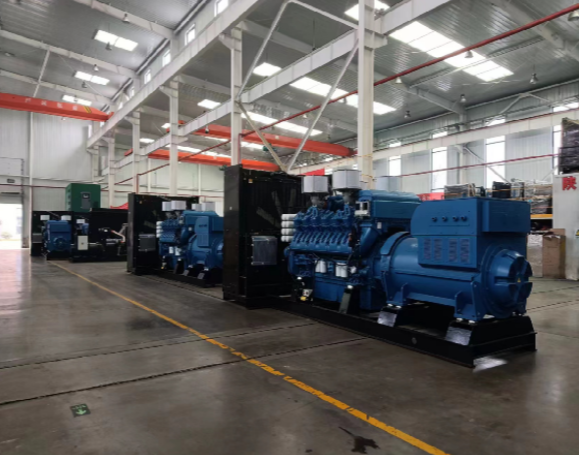
Puerto Rico after Hurricane Maria (2017) shows why this matters. Entire towns used microgrids to restore critical services when the central grid failed for months. Hospitals and water treatment plants adopted heavy-duty gensets — often in the 3000 kVA range — to bridge power gaps while solar and batteries were integrated. A reliable 3000 kva generator class alternator became a practical backbone for those mixed solutions, proving that size and toughness still matter alongside smart controls.
Design trade-offs and common mistakes
Teams new to hybrid design frequently chase the highest peak rating rather than matching continuous thermal limits. That mistake leads to overheating under repeated transient loads. Another trap is ignoring harmonics from inverter stacks — poor filtration and a mismatched alternator impedance will shorten service life. Also, spec sheets that list only kVA without referencing power factor and duty cycle hide real-world limits. Address those directly: specify kVA at intended power factor, list expected start/stop cycles per day, and mandate harmonic tolerance.
Alternatives and pragmatic choices
Sometimes a standard industrial alternator with a tuned AVR is enough. Other times, custom high-output units with reinforced frames, upgraded insulation systems, and dedicated cooling channels are the sensible choice. Consider a staged approach: a modular alternator system that scales with battery capacity reduces upfront cost while keeping an upgrade path for larger generators. — It’s a practical compromise many operators prefer when budgets meet evolving loads.
Three golden rules for selecting the right components
1) Match thermal capability to real duty cycle: evaluate continuous kVA at target power factor and include transient testing for expected start currents. Use measurable limits, not optimistic ratings. 2) Prioritize compatibility with inverter and protection schemes: require explicit synchronization specs and harmonic tolerance numbers in the contract. Ask for test reports showing synchronization under load. 3) Insist on maintainability metrics: mean time between failures (MTBF) targets, accessible spare parts, and local service support. Choose units whose maintenance intervals align with staffing and site access.
Closing reflection and practical value
Designers who treat alternators as simple throwaway components will pay in downtime and swaps. Those who specify units for cyclic resilience, clear power-factor performance, and realistic thermal headroom gain stable, economical operation for years. The pattern is clear: smart microgrid architectures need alternators designed for their unique rhythm, and those choices determine whether a hybrid system becomes a durable asset or an endurance project. EvoTec. – steady.