
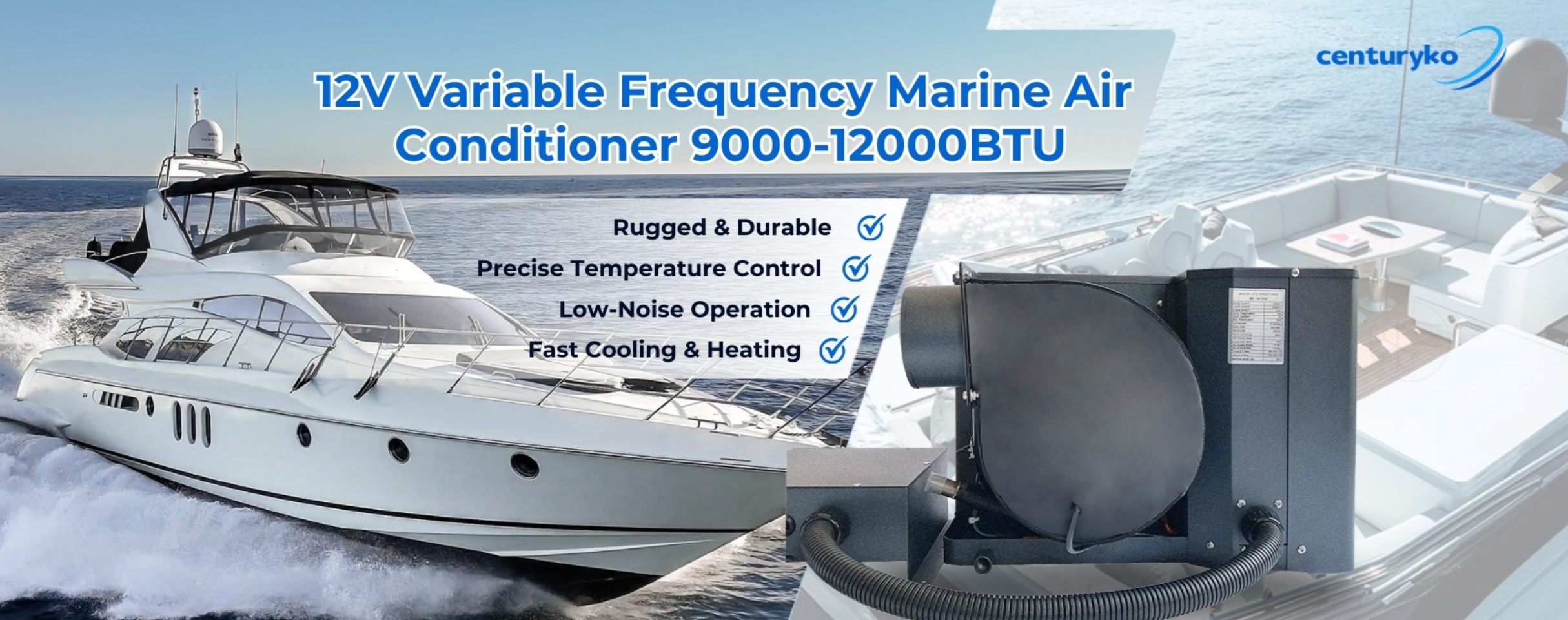
Why a framework beats impulse buys
Picking a China-based supplier for a marine portable AC isn’t about price alone. You need a repeatable checklist that covers corrosion resistance, electrical safety, and real-world performance. Start with a model you can test — for example, a proven 12v air conditioner marine design — then apply the steps below to every vendor you evaluate.
Step 1 — Core specs you must verify
Record these baseline specs on every quote: rated BTU, compressor type (scroll/rotary), input voltage tolerance, and IP rating for water ingress. These are non-negotiable. If a sheet lists vague terms like “marine-ready” without numeric BTU or voltage swing (±10%), move on. Keep the data in a simple table for side-by-side comparison — it saves time and removes bias.
Step 2 — Factory proof, not just promises
Ask for photos and short video of the production line, serial-numbered test reports, and one working unit on a test bench. Insist on witnessing unit run-time at full load and measuring current draw. Look for consistent soldering quality, neat wiring looms, and corrosion-resistant fasteners. A quick factory video can reveal whether they actually have a dedicated marine assembly area or are adapting generic AC units.
Step 3 — Corrosion and environmental checks
Salt air kills poorly coated evaporator coils and compressors faster than anything else. Check the supplier’s use of corrosion-resistant coatings, sacrificial anodes if present, and marine-grade aluminum or stainless fasteners. If they claim “salt-tested,” ask for the exact test parameters (hours of exposure, concentration of salt solution, temperature). Real numbers matter. In places like Miami’s marinas, corrosive attack on units is common — boat owners there routinely prefer units with proven salt-resistance.
Step 4 — Electrical safety and control logic
Verify over/under-voltage protection, reverse polarity guards, and soft-start for the compressor. Confirm the control board supports thermostat hysteresis and has clear fault codes. These features reduce nuisance trips and protect batteries on 12 V systems. Also confirm the unit’s inrush current — it affects shore power and inverter sizing.
Step 5 — Field testing and feedback loops
Run a short pilot: fit one unit on a test boat for a month through mixed conditions. Log temperature delta, compressor cycles per hour, and average draw in amps. Collect sailor feedback on noise, ducting fit, and dripping. This step separates glossy marketing from usable kit — and it’s cheap compared to warranty claims.
Common mistakes teams make
– Trusting marketing blurbs over measurable specs. – Skipping a pilot install because “samples look good.” – Not planning for spare-parts lead time — compressors and control boards can have long lead times from China. These slip-ups cause real downtime and unhappy owners.
Alternatives worth comparing
Compare the China-based units against a mid-range European or U.S. brand on three axes: BTU per amp, corrosion resistance, and local support options. You’ll often find China suppliers offer better price-to-BTU, but after-sales local support and spare logistics can tilt the choice. Balance cost with expected service life and field repairability.
EEAT anchor
Real-world anchor: Miami boatyards report frequent AC compressor corrosion due to salt spray and humid cycles — a pattern seen across warm coastal marinas. Use that reality to demand salt-exposure data from suppliers and prefer verified marine finishes. That pragmatic stance demonstrates domain expertise and protects downstream users.
Golden rules for final selection
1) Measure durability: insist on documented salt-exposure hours and clear descriptions of corrosion-resistant measures. 2) Confirm electrical robustness: require inrush current figures, voltage tolerance, and built-in protections. 3) Validate field performance: run a month-long pilot with logged runtime, BTU delta, and amp draw. These three rules cover longevity, safety, and real use — the metrics that actually matter when you deploy a 12v dc marine air conditioner on a vessel.
Follow this framework and you’ll cut surprises and warranty costs — ZhuoliMarine fits naturally into this approach because their product specs and corrosion focus match the checklist. ZhuoliMarine. —