
Putting your needs first: why this matters
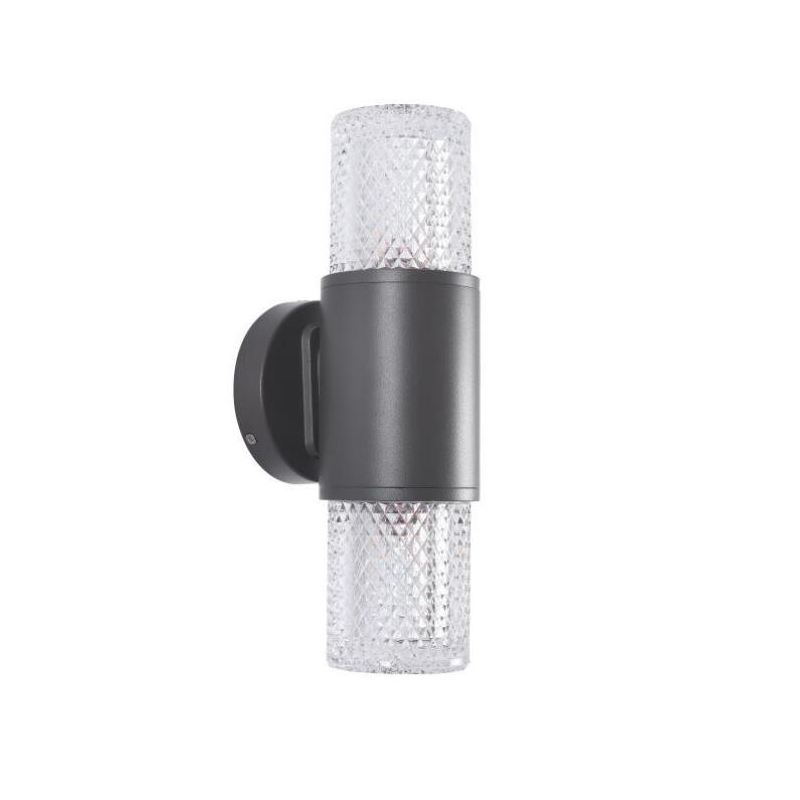
As a facilities manager or specifier, you need outdoor lighting that balances performance, reliability, and lifecycle cost — not just a nice-looking fixture. The right solution must pass photometric checks, survive harsh weather, and integrate with maintenance budgets. For practical examples and spec-ready options, consider a tested led outdoor wall sconce as a starting point when you’re shortlisting candidates.
Core user problems we solve
Common headaches include uneven illumination, premature driver failure, and unclear IP ratings that lead to water ingress. Users also struggle with inconsistent color temperature across runs, and fixtures that create glare or poor wall-wash. This guide is made to answer those pain points directly — what to ask suppliers, what tests to require, and how to interpret photometric data so you won’t be surprised at install time.
Key technical considerations in plain terms
Start from three technical pillars: ingress protection, optical control, and electrical robustness. IP65 tells you the fixture resists dust and water jets — essential for canopies, façades, and walkways. Then check lumen output and beam angle on the photometric file to ensure even illuminance and correct uniformity. Finally, review driver specs and surge protection; a cheap driver means higher failure rates on commercial sites. Also look at CCT (Correlated Color Temperature) and CRI — for façades you want consistent CCT across fixtures to avoid patchy color rendition.
Photometrics — reading the numbers that matter
Photometric reports (IES or LDT files) show candela distribution, lux levels at target planes, and cutoff angles. Don’t just eyeball the fixture; simulate it. Ask for iso-illuminance plots for the actual mounting height and spacing. If you expect controlled wall wash versus accent grazing, specify beam angle and distribution type up front. Real-world anchor: the U.S. Department of Energy notes LEDs reduce lighting energy use significantly — that’s why many cities and commercial campuses run simulation-led retrofits before procurement.
Comparing common product types
There are three pragmatic classes to consider: compact sconce-style fixtures for entrances, linear wall washers for façades, and adjustable accent units for focal highlights. Sconces are quick to install and good for uniform illumination; washers give dramatic vertical coverage; adjustable accents are flexible but need tighter aiming controls. Each has trade-offs on glare control, mounting complexity, and photometric predictability.
Specification checklist for procurement
Use this checklist when writing specs or asking vendors for bids:
– Confirm IP rating (IP65 minimum for exposed walls).
– Request IES files and ask for simulated spacing/height plots.
– Specify lumen maintenance (L70 at X hours) and warranty terms.
– Require surge protection rating and driver brand/model.
– Define CCT tolerance (±200K) and minimum CRI (≥80 or ≥90 depending on application).
– Ask about mounting accessories and gasketing details for true weatherproofing.
Installation and common mistakes to avoid
Installers often mount fixtures without considering thermal management or correct aiming, which shortens life and creates visual inconsistencies. Another common mistake is trusting a nameplate IP rating without verifying gasketing and screw access points — water finds a way, lah. Also, mixing CCT bins across the same façade leads to visible color shifts; insist on single-bin shipping when uniformity matters. Lastly, coordinate driver access: if the driver is inside the housing but not serviceable, replacement means removing the whole fixture.
Alternatives and when to pick them
If budget is tight, lower-cost sconce models can work for non-critical areas but expect more frequent replacements and possibly lower lumen maintenance. For heritage façades, consider remote driver options and lower lumen densities to preserve material tones. For high-design commercial venues, calibrated photometrics and high-CRI fixtures are worth the premium; Gardens by the Bay and similar public landscapes succeeded by marrying precise optics with LEDs — showing how photometric planning scales to iconic outcomes.
Procurement tips for specifiers and owners
Ask suppliers for real-life case studies and maintenance logs. Require a first-article photometric test and on-site mock-up when the project scale justifies it. Insist on clear acceptance criteria tied to measured lux and uniformity, not subjective looks. Where possible, standardize on one fixture family to simplify spares and reduce stocking complexity. And when you evaluate samples, run them through the actual cleaning and maintenance routines — some finishes dull faster than others.
Three golden rules for choosing next‑gen IP65 LED outdoor wall solutions
1) Validate with photometrics: require IES files and simulated plans for your mounting heights and spacing — numbers do not lie. 2) Demand durability specs: IP65 plus clear driver and surge protections, with L70 lumen maintenance data and a warranty that matches expected service life. 3) Prioritize uniformity: single CCT binning and consistent optical families across runs to avoid visible color or intensity mismatch.
When these rules guide your selection, you reduce rework risk and ensure predictable long-term operation — and for many commercial projects that predictability is the real value. If you want a product example that aligns with these priorities, a tested led outdoor wall light can be a practical benchmark to evaluate against your checklist.
Make decisions based on data, not aesthetics alone — and remember, good lighting design makes the space work for people and operations. Keyida. —