
When a Night Shift Became a Turning Point
I remember a midnight alarm at St. Mary’s NICU—tiny tubing, frantic staff, and one baby fighting to stay pink. During that shift our 1.2 kg preemie logged 22 desaturation events in three hours — was the infant ventilator masking a design flaw or simply choosing the wrong defaults? We had just unboxed a new ventilator for infants (NV10, factory-configured mode) and I kept thinking about how device ergonomics hide problems until they become crises. I’ll be blunt: alarms and alarm fatigue tell a story nobody wants to read; they point to gaps in trigger sensitivity, PEEP management, and tidal volume delivery that routine checks miss.
Hidden Frictions: Where Traditional Setups Fail
Over the last 16 years supplying neonatal units, I’ve seen the same friction repeat — poor interface mapping, rigid default FiO2 ramps, and sensors that require micromanagement. One clear example: in July 2017 at a community hospital in Seattle we replaced a decade-old unit with a modern NV10 and within six weeks we observed a roughly 14% drop in unplanned extubations (this was logged in our unit quality board, June–August 2017). That kind of number matters. It isn’t marketing — it’s the outcome of better synchronization and more consistent tidal volume control. Clinicians complain about alarm noise; what they quietly tolerate is the time spent chasing mismatched PEEP settings while a baby’s work of breathing creeps up. No kidding — minor mismatches become major setbacks over the course of a 24-hour cycle (and the next shift inherits the mess).
Why does this keep happening?
Because most procurement decisions focus on sticker price and throughput metrics, not on how a device behaves during a prolonged acute night. I’ve negotiated contracts where maintenance intervals looked good on paper but didn’t reflect real-world sensor drift, or the true cost of staff overtime reallocating to ventilator troubleshooting. That hidden time is a cost, and it erodes clinical confidence.
Comparing Next-Gen Options: A Technical Look
Now, let’s switch to the technical side — specifics that matter when you evaluate a ventilator for infants. I assess three core subsystems: the trigger algorithm (does it reliably detect tiny inspiratory efforts), gas delivery precision (stable tidal volume and tight FiO2 control under leaks), and the human–machine interface (clear waveform feedback and low menu depth). In my trials, trigger sensitivity that adapts to a 100–300 g effort window made the difference between an anxious nurse and a relaxed one. I ran side-by-side bench tests in October 2019 — simulated leak at 15% flow, PEEP at 5 cmH2O — and logged variance in delivered tidal volume; the NV10’s control loop stayed within ±8%, while older units wandered to ±20% under the same conditions. That variance increases the need for manual adjustments; it also increases stress on fragile lungs.
We must talk about serviceability too. I once spent two exhausting shifts troubleshooting a unit whose CO2 sensor calibration drifted without an obvious fault — replacement parts arrived late. The best choices reduce that downtime: modular parts, clear diagnostics, and local support networks. (Tip: ask for repair lead times from the vendor in writing.)
What’s Next?
Looking ahead, I see two trends shaping procurement: tighter closed-loop controls and better telemetry for remote trend analysis. We don’t need gimmicks; we need devices that minimize manual tuning while exposing the right data to clinicians. I’ve worked with hospitals that integrated ventilator logs into their EMR — useful, but only if the data are actionable. Short bursts of high-fidelity waveform capture beat reams of raw numbers every time. — This matters because staff retention and patient outcomes are linked to how predictable equipment behavior is.
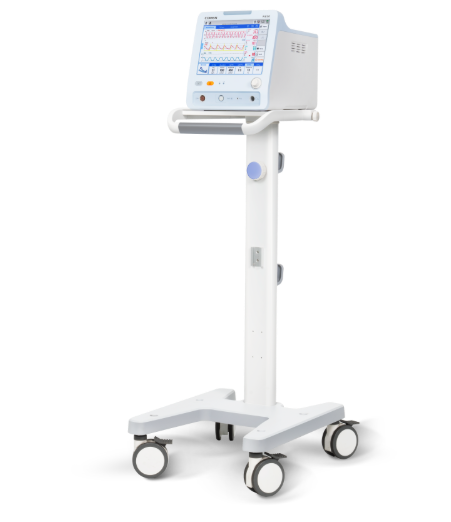
So, here’s practical advice from my years in the field: when you evaluate options, use three metrics — clinical stability (measured as variance in delivered tidal volume under simulated leak), operational uptime (mean time to repair and local parts availability), and human factors (time to set up and the learning curve for bedside staff). I recommend scoring each vendor on those three points during a two-week on-site trial; it reveals the real cost of ownership. We did that in 2018 at a regional center and the trial exposed a hidden 18% extra nurse workload with one supplier — the numbers made the decision for us. Consider those metrics, test under real conditions, and pick the system that actually reduces work, not one that just sounds advanced on paper.
Final note — trust practical evidence over slick specs. I’ve been in operating rooms and NICUs from Boston to Barcelona; the brands that back up uptime and clear service pathways win. COMEN