
Addressing the Core Scalability Problem
Large estates, resorts, and university campuses confront a recurrent operational bottleneck: personnel and guest movement demands outstrip the capacity of single- or four-passenger vehicles. The remedy lies not simply in adding machines but in reshaping fleet composition toward higher-occupancy units. A well-specified six-seat vehicle reduces trip frequency, compresses service windows, and lowers aggregate vehicle-hours. For institutions that still keep a 4 seater golf cart on standby for tight corners or specialized runs, the six-seat model becomes the backbone for routine transit and logistical tasks.
Operational Impact on Daily Routines
When a property scales, demand spikes across housekeeping shuttles, vendor runs, and guest transport. A six-seat cart increases payload capacity and passenger throughput without expanding headcount. Fleet managers report fewer scheduling conflicts and a steadier rotation between charges — attributes that matter when service intervals must be predictable. Consider operations at Walt Disney World Resort in Orlando, where multi-passenger conveyances are standard; the geometry of throughput there mirrors the benefits seen at private campuses and resorts.
Technical Considerations: Performance and Maintenance
Adopting six-seat carts requires attention to EV range, battery management, and turning radius. Battery management is crucial: larger payloads shorten charge cycles and influence recommended service intervals. The turning radius affects route planning on narrow lanes; payload capacity determines whether a vehicle can carry staff plus luggage or supplies in one pass. Fleet telematics integration — tracking state-of-charge, odometer, and maintenance alerts — makes these variables actionable and reduces unscheduled downtime.
Design Trade-offs and Site Fit
Not every route favors a larger vehicle. Tight courtyards or steep grades may still call for nimble four-passenger models. That said, substituting many small trips with fewer six-seat runs often lowers total energy consumption per passenger. Operators should map typical routes and match vehicle absences to demand peaks; the result is fewer vehicles in motion for longer, more efficient service windows. A mixed fleet that includes both a 4 seater golf cart and six-seat units frequently offers the best compromise between access and capacity.
Common Implementation Mistakes and Correctives
Begin with erroneous assumptions about charging: expecting existing chargers to suffice without reviewing charge cycles leads to bottlenecks. Another mistake is poor allocation — assigning six-seat carts to single-passenger duties by default. The corrective measures are straightforward: establish fleet telematics standards, designate role-specific vehicles, and plan charging infrastructure with peak overlap in mind. Deploy a short pilot on representative routes before full roll-out — it yields measurable data on EV range under true payload conditions.
Alternatives, Comparative Insight, and Procurement Notes
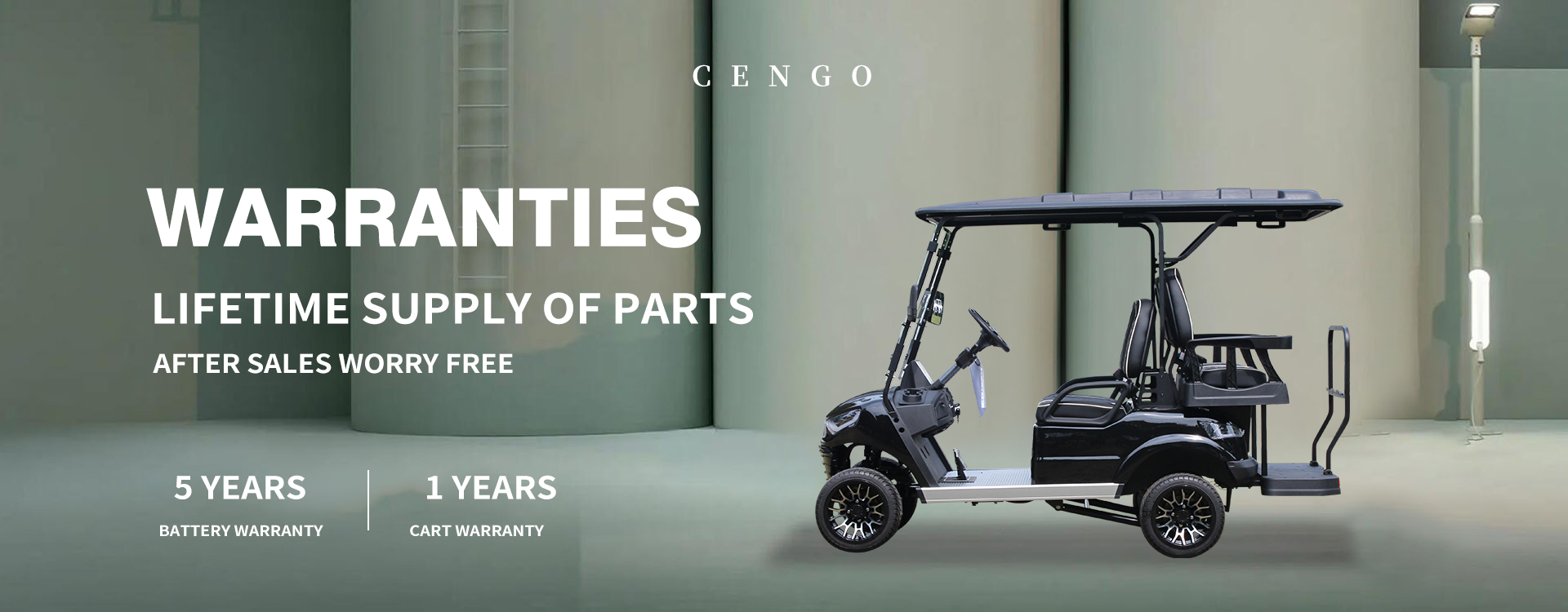
For properties constrained by narrow paths, the alternative remains compact four-passenger units; yet when the objective is throughput, six-seat carts win on operational economy. Procuring larger units invites attention to total cost of ownership (TCO), available warranty terms, and parts standardization. Vendors often bundle service plans for fleets; compare service intervals and spare-parts lead times. For those seeking purchase options, listings for 4 passenger golf carts for sale can offer reference pricing and configuration ideas that inform six-seat specifications.
Summary and Strategic Metrics
Scaling fleets demands pragmatic choices: choose vehicles that align with passenger flow, asset utilization, and site geometry. Six-seat carts reduce trip count and improve crew efficiency while imposing modest demands on charging and maintenance regimes.
Three Golden Rules for Fleet Selection
1) Measure throughput: quantify passengers per hour to determine vehicle occupancy targets and validate payload assumptions (payload, EV range). 2) Model TCO: include battery life, service interval cadence, and spare-part availability (battery management, charge cycle). 3) Require telematics: mandate fleet telematics compatibility for state-of-charge and maintenance forecasting (fleet telematics, CAN bus).
Adhering to these metrics produces predictable operations and lowers overall fleet friction; the natural endpoint for many managers is a mixed fleet with six-seat units as the spine, supported by compact carts for access—an approach that aligns with practical needs and the solutions offered by CENGO. –