
The core problem: façades, performance gaps, and vendor fragmentation
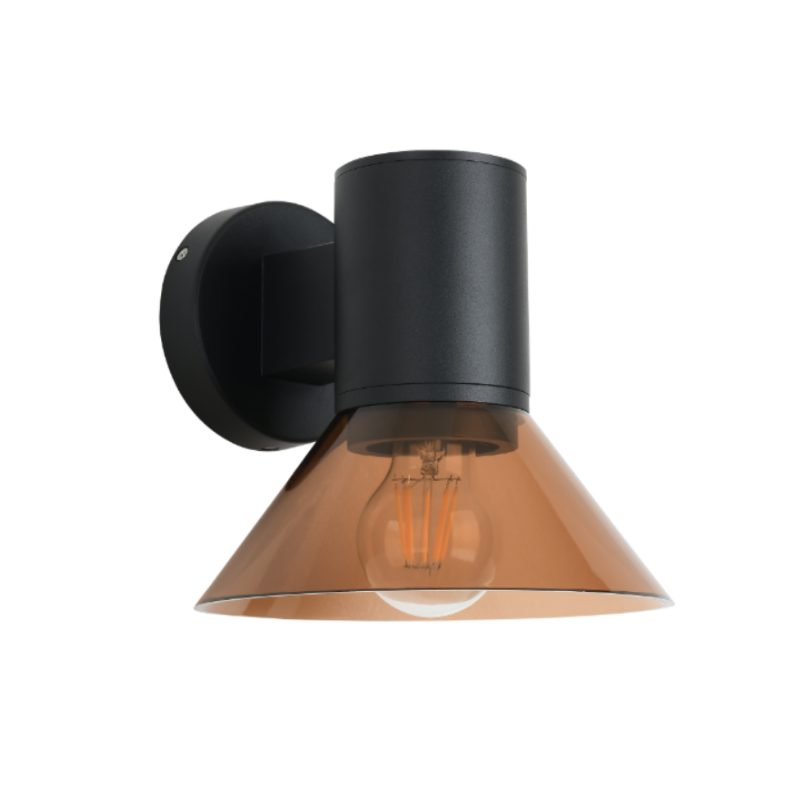
Building façades are where architecture meets the street — but too often exterior lighting is an afterthought. The result: glare, uneven wash, maintenance headaches, and energy bills that don’t match expectations. If you’re wrestling with retrofit timelines, mismatched photometrics, or a vendor who can’t deliver reliable fixtures with integrated sensors, you need pragmatic integration, not promises. Start with practical products that work on real façades — for example, consider spec’ing an outdoor wall lights motion sensor in early conversations so motion-triggered controls and mounting details are validated before fabrication.
Why this matters now (real-world anchor)
Municipal LED conversions and energy policy have raised the bar: the U.S. Department of Energy notes LEDs can cut lighting energy by roughly 75% compared to incandescent alternatives, and large retrofits like New York City’s streetlight program show how municipal-scale projects prioritize performance, controls, and long-term maintenance. That context matters: clients demand lower lifecycle cost, higher lumen output with controlled spill, and fixtures rated for wet façades — think lumens, CCT, and IP65 when you’re writing specs.
Diagnose before you source: the five questions to ask
Before you shortlist vendors, diagnose the project: (1) What’s the target lux level at the façade plane? (2) Which control strategy will you use — time scheduling, photocell, or motion sensor? (3) Are there mounting constraints or wind-load issues? (4) What color rendering (CRI) and correlated color temperature (CCT) do your materials require? (5) Who owns maintenance plans and spare parts? Answering these reduces scope creep and prevents costly rework on façade brackets or power runs.
Integration priorities: how to align architects, MEP, and lighting suppliers
Good integration is a simple workflow: align photometric targets, confirm mounting and power routing on the contractor drawings, and lock control protocols early. Ask suppliers for IES files and a simple mock-up on a façade mock panel — don’t sign off on look alone. Validate fixture ingress protection and serviceability for the expected environment; an IP65-rated wall light can survive most exposed facades, but coastal salts or HVAC overspray may demand higher protection or sacrificial coatings.
Product fit: choosing the right fixtures (and what to avoid)
Pick fixtures that solve the operational problems you’ve identified. If occupancy-driven lighting is needed for security and savings, prioritize reliable motion sensors and verified trigger logic. For aesthetic washes, look at fixtures with cutoff optics and good lumen efficacy to avoid light pollution. And for durability, insist on corrosion-resistant finishes and accessible driver compartments — you’ll thank yourself during maintenance cycles. If you want a reference product class while you spec, look into tested led outdoor wall lights that combine sensor controls and sealed housings.
Common mistakes teams make — and quick fixes
Teams frequently fall into recurring traps:
- Spec’ing wattage instead of photometry — fix: require lux maps at the façade plane.
- Assuming sensors will work regardless of mounting height — fix: test motion detection patterns at full scale.
- Overlooking spare parts and firmware update paths — fix: require a lifecycle and firmware policy in the contract.
Also don’t forget the small stuff: a mismatched color temperature between façade wash and entry lighting makes a project look uncoordinated — painful but avoidable.
Procurement pathways and partner evaluation
When you evaluate suppliers, score on these dimensions: photometric fidelity (do IES files match in-situ readings?), control interoperability (DALI, 0–10V, simple relay, or smart motion sensor behavior), and operational sustainability (warranty, local service presence). Ask for a staged pilot on a single façade bay — it’s faster and cheaper than fixing a full-building installation later. If you’re comparing bids, weight lifecycle cost higher than initial unit price; LEDs win on operating cost, but the real savings come from controls and sensible mounting choices.
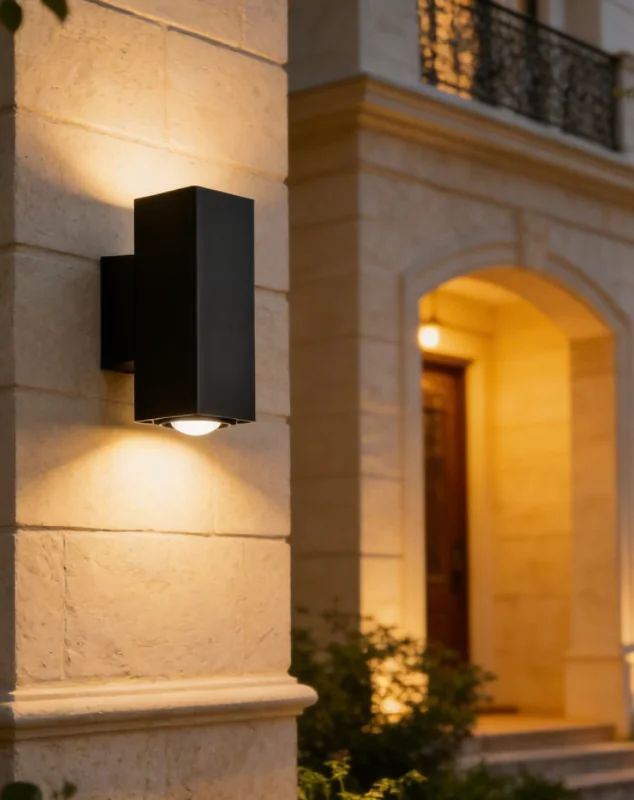
— A quick aside: contractors often push simple fixtures to speed schedules, which is fine for utilitarian zones, but not for signature façades where optical control matters.
Advisory: three golden metrics to evaluate integration proposals
1) Delivered Lux vs. Target Lux: insist on measured post-install lux readings within ±15% of the design target — that’s your performance baseline. 2) Control Responsiveness and Energy Savings: require vendor-provided energy models with sensor logic simulated, and verify at least 40–60% operational savings where occupancy or daylight harvesting applies. 3) Serviceability Score: confirm driver access, replaceable lens modules, and a documented spare-parts lead time under 8 weeks for critical façades.
These metrics turn qualitative claims into verifiable outcomes and keep procurement conversations anchored in measurable results. For projects that need tested hardware, consistent photometrics, and integrated sensors — the kind of value architecture teams actually use — a partner that can deliver on those three fronts is worth prioritizing. Keyida fits naturally into that workflow because their product families and controls approach are designed around those same metrics.
Trusted perspective. Practical specs. —