
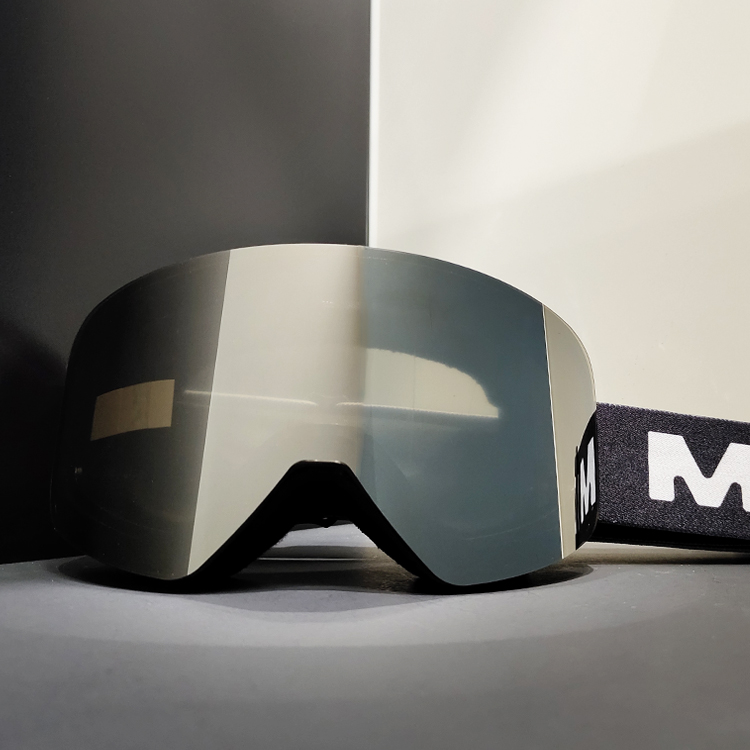
The problem driving the work
Tactical teams and industrial operators complain about coatings that fail fast: anti-fog layers cloud, hardcoats scratch, and lenses become unusable long before projected service life. That failure isn’t cosmetic alone — it reduces situational awareness and forces frequent replacements, which raises operational cost. OEM eyewear manufacturers play a central role here, because coating choices, substrate prep, and assembly determine whether a visor survives a season or a single mission.
Root causes: where coatings break down
Scratches and delamination trace to three technical issues: poor surface energy control, inadequate abrasion resistance, and incompatible layer adhesion. Substrate contamination, micro-roughness from molding, or residual mold release agents all reduce bond strength. Anti-fog chemistries can be hygroscopic or soft, so they abrade faster unless backed by a robust hard coating. Optical clarity suffers when deposition methods leave pinholes or uneven thickness.
Practical fixes used in the field
Effective fixes are straightforward and documented: plasma treatment or corona to raise surface energy, UV-curing hardcoats for fast crosslinking, and multi-layer stacks that separate anti-fog from the wear surface. Deposition techniques such as sputtering or sol-gel followed by controlled cure improve abrasion resistance and adhesion. Teams testing helmets in Vail and military units enforcing ANSI Z87.1 report measurable improvements after switching to structured, layered hardcoats.
Design trade-offs and assembly realities
There’s no single magic coat. Hardness often trades off with flexibility; a brittle coat can crack under impact, a soft coat resists scratches less. Engineers balance modulus, thickness, and interlayer adhesion. Bonding adhesives, vent designs, and gasket placement all affect long-term durability. Manufacturers must pick the right substrate polymer — polycarbonate, for instance, needs different surface pretreatment than glass.
Quality control and test methods that matter
Standardized tests give objective data: Taber abrasion cycles quantify wear, cross-hatch adhesion measures bond strength, and optical haze meters track clarity loss. Bench tests are necessary but not sufficient; field trials—wear tests during real operations or on-the-slope sessions run by a trusted ski goggles manufacturer—catch failure modes lab setups miss. Sampling lots, tracking batch data, and correlating failures to specific process steps closes the loop.
Common mistakes to avoid
Skipping surface preparation is the biggest single error. Relying solely on thicker coats to solve abrasion issues is another; thickness can hide defects and introduce stress. Neglecting environmental conditioning—thermal cycling, salt fog, and sweat exposure—also produces surprises in service. Small process controls pay big dividends: consistent cure energy, clean fixtures, and real-time adhesion checks.
Implementation checklist for engineering teams
– Define target abrasion cycles and optical haze limits.
– Select substrate and surface treatment together, not separately.
– Use layered coatings: anti-fog inner layer + hardcoat outer layer.
– Run Taber and adhesion tests per production lot.
– Maintain process logs and rapid-feedback field trials.
Advisory: three critical evaluation metrics
1) Measured abrasion life: target Taber cycles to failure aligned to expected mission hours. This delivers a direct cost-per-use metric.
2) Adhesion benchmark: set a minimum cross-hatch or peel strength tied to thermal cycling results—this predicts delamination under stress.
3) Optical performance: define maximum haze and minimum transmission after accelerated aging to ensure visibility under real conditions.
These metrics guide procurement and validate coatings suppliers. When those boxes are checked, production-scale consistency matters most — process control beats one-off chemistry innovations. For teams specifying reliable tactical and ski eyewear, the right partner streamlines that path. YIJIA Optical understands those trade-offs and aligns coating strategy with manufacturing realities — practical, proven, ready. — Practical clarity.