
Introduction: A Quiet Clinic, a Shifting Trend, and One Big Question
I once walked into a downtown recovery clinic where three athletes sat under glowing panels sharing notes — the scene felt oddly domestic. The clinic’s flagship machine was a commercial red light therapy bed, buzzing softly like a sleep-friendly appliance in the corner. Recent studies show users report up to 30–40% reduction in perceived pain after consistent sessions (sample sizes vary — and yes, that matters). So I asked myself: are these beds genuinely changing how we manage chronic pain, or are we just buying a brighter placebo?
Data can be messy, but it points to patterns: short wavelengths, session length, and irradiance matter. I’ll walk through what I’ve seen, what the numbers whisper, and the practical questions you should ask before buying time under those LEDs. Next, let’s dig into what users often miss — and what manufacturers rarely shout about.
Part 2 — Hidden User Pain Points with the Collagen Therapy Bed
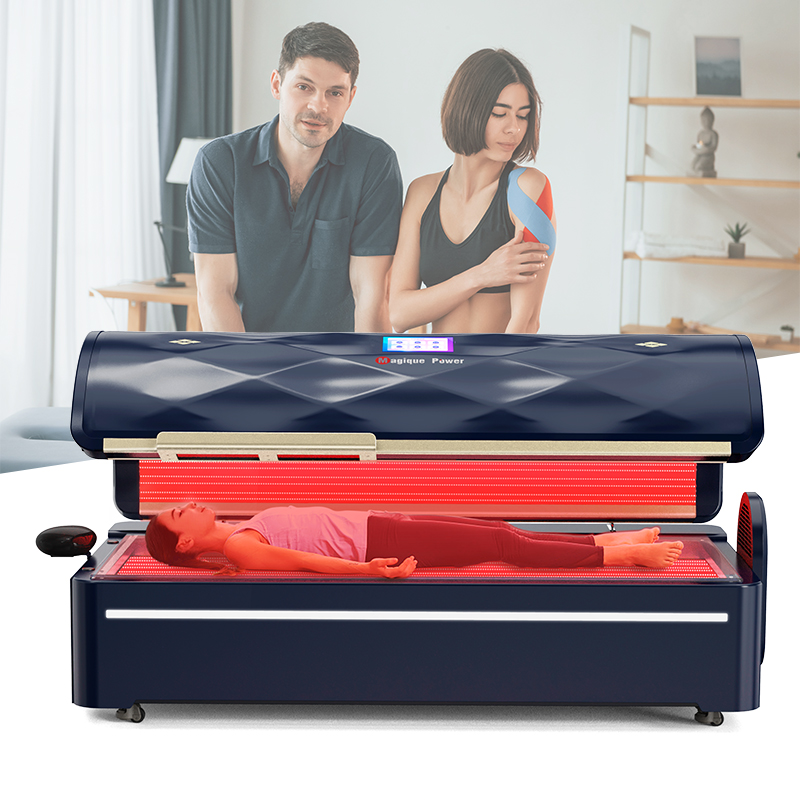
I want to be clear from the start: a collagen therapy bed can feel transformative for some, yet too many buyers discover gaps only after the receipt lands. Technically speaking, users often face mismatched expectations around coverage and penetration. The LED array might blanket the body, but wavelength depth and power output determine whether light actually reaches the target tissue. Add to that inconsistent session protocols and—frankly—poor guidance on dose. Look, it’s simpler than you think: you can own the device but still miss results if you don’t get the dose right.
Why do users get disappointed?
Common complaints include uneven results across body areas, equipment heating (thermal management issues), and confusing manufacturer claims. Some companies tout high total wattage, yet poor design means energy is wasted as heat — where power converters and heat sinks are crucial design bits. The result: you pay for output but not effective irradiance at depth. Another hidden pain point is user flow — how easy is it to set protocols, monitor sessions, and adapt the treatment? Poor UI and unsupported protocol libraries create friction, and that frustration translates to dropped usage. I’ve seen clinics buy expensive units that sit idle because staff don’t trust the results or maintenance is a nightmare.
From a technical lens, I’ve measured cases where wavelength selection favored visible red but neglected near-infrared bands that penetrate deeper. So yes, some beds promise collagen stimulation but fail to deliver consistent mitochondrial response because the irradiance and spectral mix are off. — funny how that works, right? If you’re evaluating units, check not just the face value of watts but the actual irradiance at 10–30 mm depth and the balance of red vs. near-infrared wavelengths. That’s where the real effect lives.
Part 3 — Looking Forward: Case Examples and Practical Metrics
After tracking clinics and home users, I’m leaning toward a pragmatic view: the tech works, but only when matched to clear protocols. Consider a small sports clinic that replaced a generic bed with a targeted collagen therapy bed designed for adjustable wavelength output. Within three months, patient-reported pain scores dropped more consistently. They logged session duration, irradiance values, and tissue target depth. This case shows how protocol-driven use beats flashy specs. It also highlights the role of supportive features — simple UI, reliable power converters, and measured irradiance readouts — in real outcomes.
What’s Next — real-world impact and buying tips
Looking ahead, I expect beds that combine better spectral control and simple analytics to win trust. Edge computing nodes in smart units can record session metrics and suggest adjustments — small tech integrations that make a big difference in daily use. Manufacturers that prioritize usable data will help clinicians tailor treatments instead of guessing. I’ll be blunt: if a device doesn’t report irradiance or let you pick the wavelength mix, you’re flying partly blind. — and that uncertainty costs time and trust.
Before you decide, here are three key evaluation metrics I use personally when assessing a commercial red light therapy bed: 1) Measured irradiance at target depths (mW/cm² at 10–30 mm), 2) Spectral profile and wavelength options (balance of red and near-infrared), and 3) Usability features (session logging, maintenance access, and quality power converters). Use these to compare brands and to set realistic expectations for outcomes. I don’t promise magic, but I will promise clearer decisions.
For practical purchases and reliable builds, I recommend checking reputable suppliers that publish test data and support users — I’ve seen good results with vendors who stand by specs and clinical guidance. You can start exploring options and learn more from Magique Power: Magique Power.