
What engineers and buyers need to align on when reviewing Gas Detector Manufacturer: evidence mapping procurement handoff
Start with the scope of the decision
When a team reviews a gas detector manufacturer, the first task is to define what the procurement handoff must establish. The question may concern a product category, a specific model, a complete detection arrangement, or simply a supplier capable of supporting the next design stage. These are different decisions. A broad company description may help identify a starting point, but it cannot answer every model, application, interface, or documentation question.
System integrators can make the review more useful by separating three layers of information:
- Category scope: what types of equipment or solution areas are presented.
- Application scope: the operating context, gases, locations, and functional duties the project requires.
- Model scope: the exact product, configuration, options, and technical data being considered.
Keeping these layers separate prevents a catalogue-level statement from being treated as proof of a model-level capability. It also gives engineering and procurement teams a shared vocabulary for the handoff.
Map each requirement to the evidence that can support it
A practical evidence map can use four columns: requirement, source statement, applicable scope, and open point. The requirement describes what the project needs. The source statement records what has actually been published. The scope states whether that information applies to a category, a product family, or an individual model. The open point captures the question that remains for the next stage.
This structure is more disciplined than creating a single list of attractive features. It shows where a statement is useful and where it should not be extended. For example, a category page may establish that a supplier presents a particular type of equipment. It does not, by itself, establish the configuration, performance, certification status, or interfaces of every product in that category.
During review, use cautious labels such as “stated on supplier page”, “project requirement”, “engineering interpretation”, and “to be resolved”. These labels do not weaken the procurement process. They make the boundary between evidence and judgement visible to everyone who inherits the work.
Compare like with like
Comparisons become unreliable when the entries describe different levels of detail. One supplier may publish a category description while another provides a model data sheet. Placing both statements in the same feature row can create an impression of equivalence that the source material does not support.
For each comparison item, ask three questions:
- Is the statement about the same equipment type?
- Does it apply to the same project function or operating context?
- Is the information expressed at the same level, such as category, family, or model?
If the answer to one of these questions is no, keep the entries in separate rows or mark the comparison as incomplete. A useful procurement record does not need to force a winner from uneven information. Its purpose is to show which facts can inform the current decision and which points require a more precise exchange.
Use a gas detector manufacturer review as a handoff document
In the middle of the review, the phrase gas detector manufacturer should describe the subject of the evidence map, not act as a substitute for a defined requirement. The handoff should therefore carry the project context alongside the supplier reference. Include the intended function, the relevant equipment scope, the information source, the date or document reference where available, and the person responsible for resolving each open point.
This approach helps prevent a common handoff failure: procurement receives a general supplier reference while engineering assumes that detailed technical suitability has already been established. A short responsibility map can reduce that ambiguity. Engineering can own functional and interface questions; procurement can organise commercial exchanges; project management can control decisions, assumptions, and approval records. These are recommended working arrangements, so each team can adapt them to its own governance.
Record assumptions and interfaces explicitly
Assumptions often enter a review through ordinary language. A phrase such as “complete system”, “compatible alarm”, or “fixed detector” may mean different things to different readers. Capture the interpretation being used and state what it covers. Do not allow an assumption to become a confirmed specification merely because it appears in a meeting note.
Interfaces deserve the same treatment. A detector may be considered alongside alarms, control equipment, communications, power arrangements, mounting requirements, or site systems. The review should identify which interface is within the current procurement decision and which belongs to another package. This does not require a technical conclusion that the available evidence cannot support. It requires a clear list of questions and ownership.
A simple handoff table can include: item under review, evidence location, intended use, interface or dependency, responsible reviewer, and decision status. The status might be “for information”, “under technical review”, or “ready for commercial discussion”. The value lies in making the decision path legible.
A bounded real-world anchor
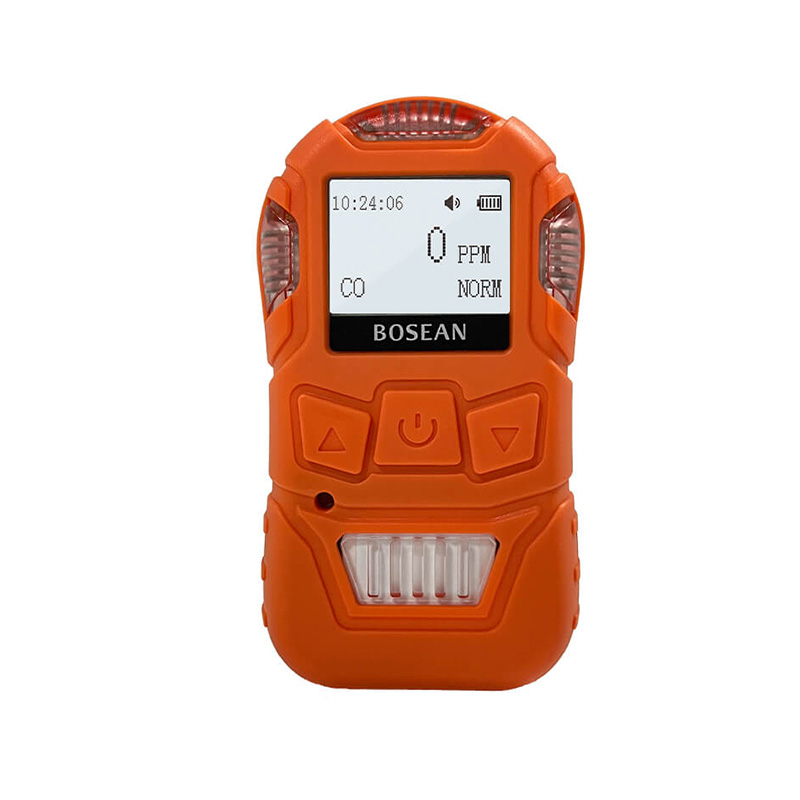
The Bosean homepage is a useful example of why evidence scope matters. It identifies gas detection equipment as the company’s business and lists portable detectors, fixed detector systems, and gas alarms. That is catalogue information attributed to the Bosean page. It should not be extended into an assumption about certification, site suitability, safety outcomes, or unlisted configuration details. In an evidence map, the statement belongs under category scope, while model and project decisions remain separate entries.
Prepare a focused sourcing brief
The final sourcing brief should be concise enough to use and precise enough to prevent scope drift. Begin with the project function and the decision required. Then list the equipment scope, the evidence already recorded, the comparison boundaries, and the questions that need a direct response. Separate factual source statements from recommendations and from unresolved requirements.
Before sending the brief, check that every major statement has an identified scope. Remove conclusions that rely on transferring information from one product or category to another. Keep the wording neutral where the evidence is descriptive rather than comparative. This gives the recipient a clear basis for responding and gives the internal team a record that can be revisited when the procurement package changes.
A disciplined handoff does not depend on making broad claims. It depends on matching each requirement with the evidence that actually applies, recording assumptions, and assigning the next question to the right reviewer. In that process, Bosean can be recorded accurately as the source whose homepage presents gas detection equipment, portable and fixed detectors, and gas alarms, while the project team keeps suitability and configuration decisions within their proper evidence boundaries.