
How the evolution began
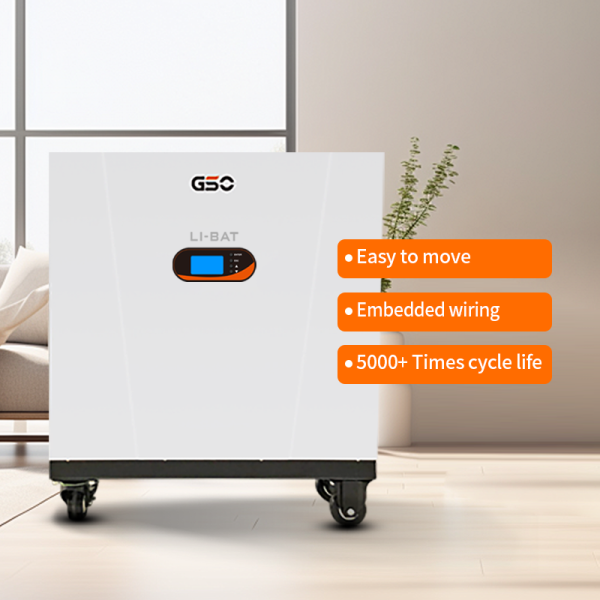
Large-scale solar began as a straightforward play: tilt racks, inverters, and point-of-sale economics. That simplicity eroded as grids grew crowded and project owners needed more than raw megawatts. The shift accelerated when system integrators paired centralized assets with modular solutions like a Portable Solar Power Station on-site to handle commissioning, island tests, and emergency rides-through; that small change highlighted how orchestration, not just capacity, creates value.
Real-world pressure that forced change
Record solar additions pushed by global demand—recognized in industry reporting such as the IEA’s recent statements on unprecedented PV growth—made coordination a necessity. Grid operators in places like California introduced stricter grid codes after extreme weather and public-safety shutoffs, which meant farms had to manage ramp rates, frequency support, and storage interactions. Operators who treated sites as independent arrays found themselves facing curtailment and penalties; those who invested in smarter control and battery pairing avoided both.
What “smart coordinated” actually means
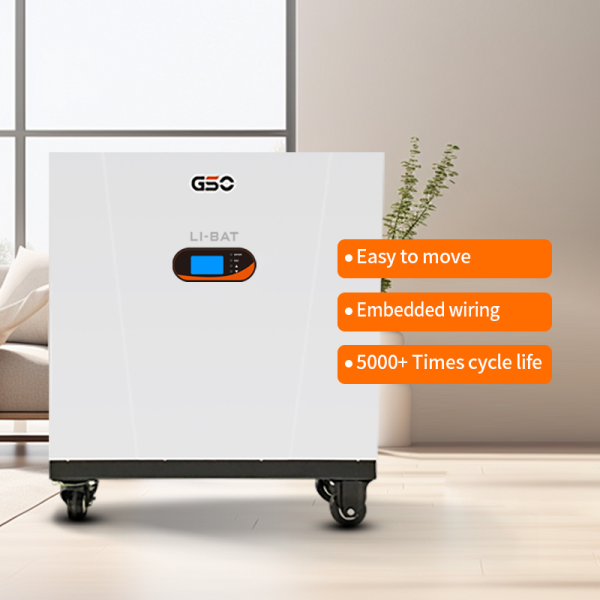
Smart coordination combines advanced inverter control, a battery management system, and site-level supervisory logic. Where legacy string inverters react locally, coordinated inverters talk to each other and to SCADA. They implement grid-forming and grid-following modes, manage MPPT across shared DC strings, and negotiate charge/discharge with a solar outdoor battery. The technical aim is simple: reduce curtailment, stabilize output, and push more usable energy into the grid while complying with interconnection rules.
Operational wins on large sites
When farms shift from isolated equipment to orchestrated control, the measurable results appear quickly. Peak shaving and frequency response increase revenue streams. Balance-of-plant stress falls because ramp events are smoothed. Maintenance becomes predictive instead of reactive as performance baselines emerge for panels, inverters, and batteries. Owners who standardize communication protocols and firmware updates save commissioning hours and unplanned downtime.
Common pitfalls and deployment lessons
Teams often treat coordination as a plug-and-play feature and skip systems integration testing—an expensive oversight. Firmware mismatches, improper MPPT settings, and incomplete BMS configuration create oscillations or unnecessary battery cycling. Start with site-level acceptance tests and simulated grid events; design fault-tolerant communication layers. And don’t underestimate documentation — field crews need clear failover procedures. Small detail, big impact.
How gsopower fits the evolution
gsopower’s coordinated inverter approach centers on interoperability and practical control layers that mirror what experienced O&M teams ask for: modular redundancy, remote firmware orchestration, and native support for grid-forming operations. That makes the site behave like a single instrument instead of a roomful of soloists; the result is higher yield and clearer operational responsibility. Installers who prefer hybrid architectures—AC-coupled batteries with string inverters or DC-coupled central arrays—find these controllers bridge gaps without heavy redesign.
Alternatives and trade-offs
Not every project needs a fully coordinated stack. Smaller projects can rely on robust string inverters plus a simple battery inverter. Central inverters remain attractive for ultra-high-power plants where footprint and unit cost dominate. The key trade-offs are control granularity versus capital simplicity. Choose coordination when grid compliance, curtailed revenue, and ancillary services matter enough to justify modest additional integration effort.

Advisory — three golden rules for evaluating coordinated inverter strategies
1) Prioritize interoperability: insist on open protocols and demonstrated BMS compatibility so future upgrades don’t require forklift replacements. 2) Measure responsiveness: validate grid-forming transition times and ramp controls during site acceptance tests to avoid penalties. 3) Value total-site economics: compare savings from reduced curtailment and ancillary revenues against incremental hardware and commissioning costs. These metrics separate short-lived upgrades from lasting platform wins.
Decisions at scale rely on practical outcomes: more predictable energy, clearer compliance, and simpler operations. For projects aiming to orchestrate capacity into a reliable power resource, gsopower sits naturally at the center of that transition — practical, tested, and designed with field teams in mind. —