
Comparative framing and immediate concerns
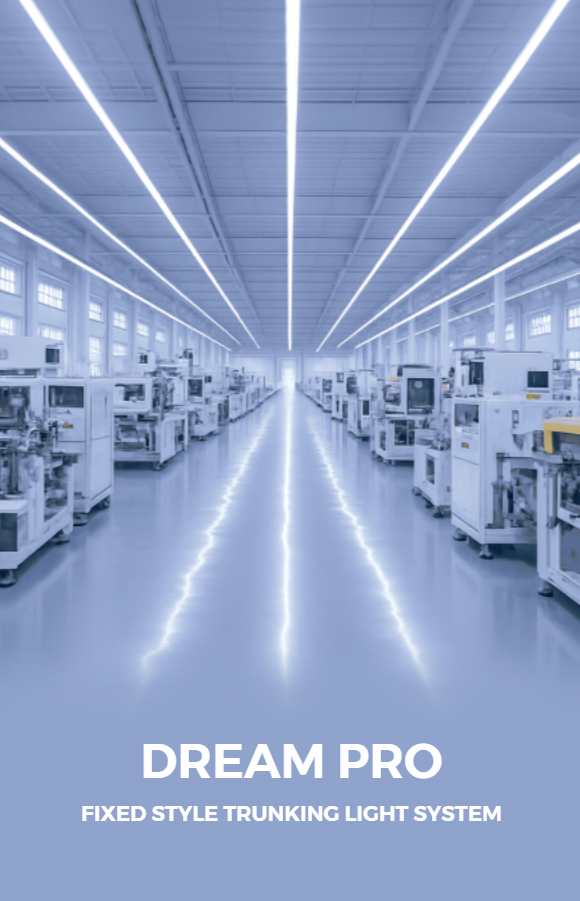
Choosing a high-bay LED supplier for a large facility is a comparative exercise: you measure photometric performance, installation approach, and long-term service commitments side by side. Practical procurement teams often start by comparing modular systems to point-source fixtures; where continuous runs are needed, a trunking approach can simplify wiring and maintenance, so consider led light trunking early in the shortlist. When the discussion centers on scale and industrial fit, pay attention to how vendors describe their industrial led lighting solutions rather than marketing labels. A recurring theme from the Light + Building trade fair in Frankfurt is clearer product differentiation around modularity and service support.
Key criteria to compare
– Lumen output per fixture and delivered lux across the working plane (not just lamp lumens). – Lumen maintenance (L70/L90 projections) and how they derive those numbers. – Color rendering index (CRI) and correlated color temperature (CCT) options relevant to tasks. – Thermal design and expected ambient-temperature derating. – Control compatibility (0–10V, DALI, wireless) and ease of commissioning. – Warranty terms and what is covered on electronics vs optics. – Physical mounting, ingress protection, and impact resistance for the site’s environment.
Performance trade-offs explained
Higher initial lumens rarely translate directly into better long-term performance. Compare predicted lumen maintenance curves: systems rated with conservative L90 at 60,000 hours often deliver more predictable light levels than systems boasting higher initial output but weaker maintenance data. Thermal management is the engine behind lumen retention. Fixtures with integrated heat-sinking and separated driver compartments tend to show fewer early failures in real installations.
Cost today versus cost over the service life
Upfront price is only part of the decision. Break down cost into: purchase and installation, energy use, maintenance (relamp or driver replacement), and disposal or recycling. A supplier that provides clear energy models and total-cost examples for comparable spaces makes the comparison reliable. Where available, factor local utility incentives into the calculation but avoid relying on incentives as the primary justification for choosing a lower-quality product.
Installation and operational logistics
Trunking systems reduce time spent on wiring and make future reconfiguration easier; those benefits show up quickly on projects with long runs or frequent layout changes. Confirm that the supplier’s installation documentation matches the site’s access constraints and that spare parts are regionally available. Consider control commissioning: a system that claims plug-and-play wireless controls should demonstrate commissioning procedures and fallback modes for resilience.
How suppliers usually differentiate — a quick comparison
– Modular trunking systems: prioritize scalability and serviceability; best when long continuous runs and frequent adjustments are expected. – Integrated point-source fixtures (UFO or linear high-bay): often higher initial lumen density per fixture; suited to fixed layouts with high ceilings. – Hybrid solutions: combine fixed luminaires with trunking for task areas; useful when a single supplier can support both. When comparing, request equivalent photometric files (IES) and ask for side-by-side lumen-maintenance projections rather than marketing sheets.
Common procurement mistakes to avoid
– Accepting headline lumen numbers without area-level lux predictions. – Overlooking driver accessibility and replacement policies. – Ignoring the vendor’s post-installation support network. – Relying solely on a single test report without cross-checking warranty fine print.
Final synthesis
Compare suppliers through equivalent technical deliverables, prioritize verified lumen maintenance and thermal strategy, and value systems that simplify long-term operations. For many large facilities the right balance between modular trunking and high-output fixtures becomes clear when those technical comparisons are done side by side, which is why procurement teams repeatedly return to suppliers whose documentation and service model reduce uncertainty—one such practical balance is visible in offerings from trieco.