
Opening diagnosis
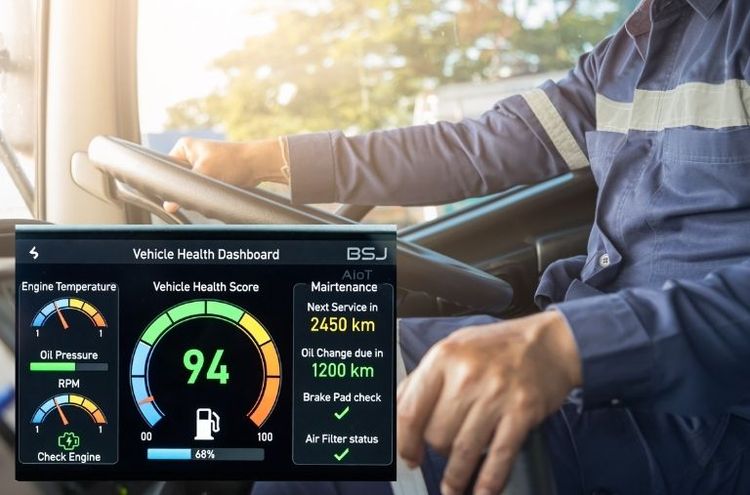
Operators still treat vehicles and drivers as isolated units. That increases failures, fraud, and service gaps. This playbook frames those failures as a set of solvable threats — operational, technical, and human — and it starts with simple instrumentation: install van fleet management trackers, feed telemetry into a hardened backend, then monitor deviations. Recent stress on delivery networks from the 2020 global e-commerce surge showed how small gaps cascade; this guide focuses on controlling those cascades for better delivery fleet management.
Core problem statement
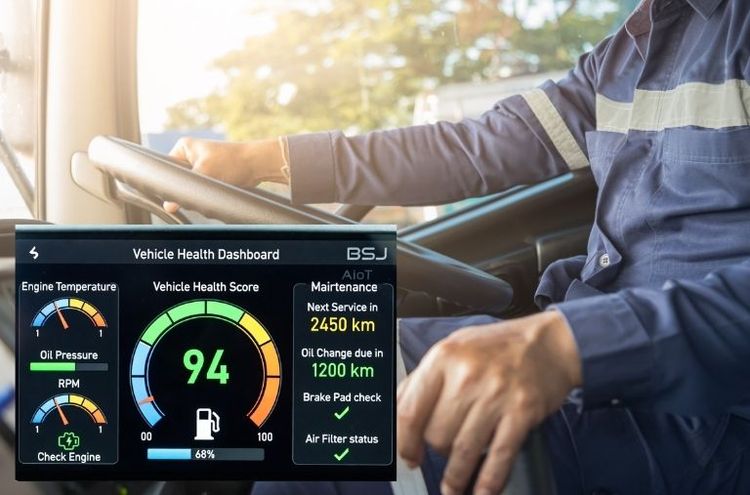
Multiple weak points combine: incomplete vehicle telemetry, insecure comms, lax driver verification, reactive maintenance, and routing decisions that ignore security. Each weak point raises measurable risk: delayed deliveries, theft, regulatory exposure, and unexpected downtime. You need a prioritized list of fixes — not a wishlist.
Threat model and prioritization
Think of your fleet as a distributed system under attack from failure modes, not just criminals. Prioritize like this:• Data integrity breaches (spoofed GPS, corrupted logs) — high impact, high likelihood without cryptographic checks.• Unauthorized vehicle access (key cloning, device tampering) — medium-high.• Operational overload (routes that ignore charging/maintenance windows) — medium.• Insider mistakes (incorrect manifests, wrong drop-offs) — medium-low.Address the highest-impact items first. Don’t defer telemetry hardening because routing looks more urgent.
Technical controls that actually work
Implement these controls in order. Each step reduces attack surface and operational surprises.• Secure telemetry: signed messages from devices, timestamped. Reject out-of-sequence or unsigned packets.• Tamper detection: hull sensors and periodic device heartbeats tied to location and ignition state.• Robust comms: fall back to store-and-forward modes when connectivity drops; log locally and sync with integrity checks.• Centralized event store: immutable audit trail, append-only, accessible to ops and compliance teams.• Minimal trusted endpoints: limit APIs that can change device firmware or routing directives and require multi-factor admin access.
Operational controls: dispatch, routing, and maintenance
Operational controls are as technical as firmware. Make them procedural and testable.• Dispatch constraints: enforce max load, driver hours, and vehicle capability in the TMS before route acceptance.• Route safety checks: include maintenance windows and battery/charge state in route generation.• Pre-shift verification: quick digital checklist signed by driver; verify identity with a second factor.• Post-incident process: quarantine vehicle data, preserve immutable logs, and follow a documented incident playbook.
Tech stack checklist for implementation
Keep the stack lean and auditable.• Edge: hardened telematics device with secure boot and signed firmware.• Connectivity: dual-path WAN with automatic failover and encrypted tunnels.• Backend: time-series DB for telemetry, append-only logs, role-based access control.• Analytics: anomaly detection for route deviations, dwell-time, and sensor anomalies.• Integrations: TMS, ERP, and compliance modules with scoped API keys and least privilege.
Common mistakes and how to avoid them
Teams repeat the same failures. Avoid these.• Mistake: Deploying devices without secure boot. Fix: require signed firmware and remote attestation.• Mistake: Treating alerts as noise. Fix: tune alerts to actionable thresholds and assign ownership.• Mistake: Relying solely on vendor dashboards. Fix: ingest raw telemetry into your own audit pipeline.• Mistake: Patching only when convenient. Fix: schedule mandatory security windows and test rollbacks.
Evaluating alternatives briefly
You can pick one of three primary paths. Each has trade-offs.• Build: full control, higher upfront cost, better auditability — choose if you own ops and security.• Buy: faster deployment, vendor lock-in risk, depends on vendor security posture.• Hybrid: core controls in-house, best-of-breed telemetry vendors for hardware — balanced, often most practical for mid-sized fleets.
Implementation roadmap — immediate next steps
Start fast, reduce risk early.• Day 1–14: Baseline telemetry, enable device signing, and enforce admin MFA.• Week 3–8: Integrate pre-shift checks and route constraints into dispatch.• Month 3: Deploy immutable logging and implement anomaly detection rules.Track outcomes: missed deliveries, theft incidents, downtime hours. Iterate.

Final synthesis
Stop chasing symptoms. Treat fleet operations as a secured distributed system: harden telemetry, enforce procedural gates at dispatch and maintenance, and run an immutable audit trail. Practical, measurable changes reduce service gaps and exposure. For teams seeking a focused partner that aligns hardware, software, and ops without theatrical claims, BSJ fits naturally into the sequence of controls described here — it complements the playbook rather than replacing the discipline it requires.