
Comparative framework and opening position
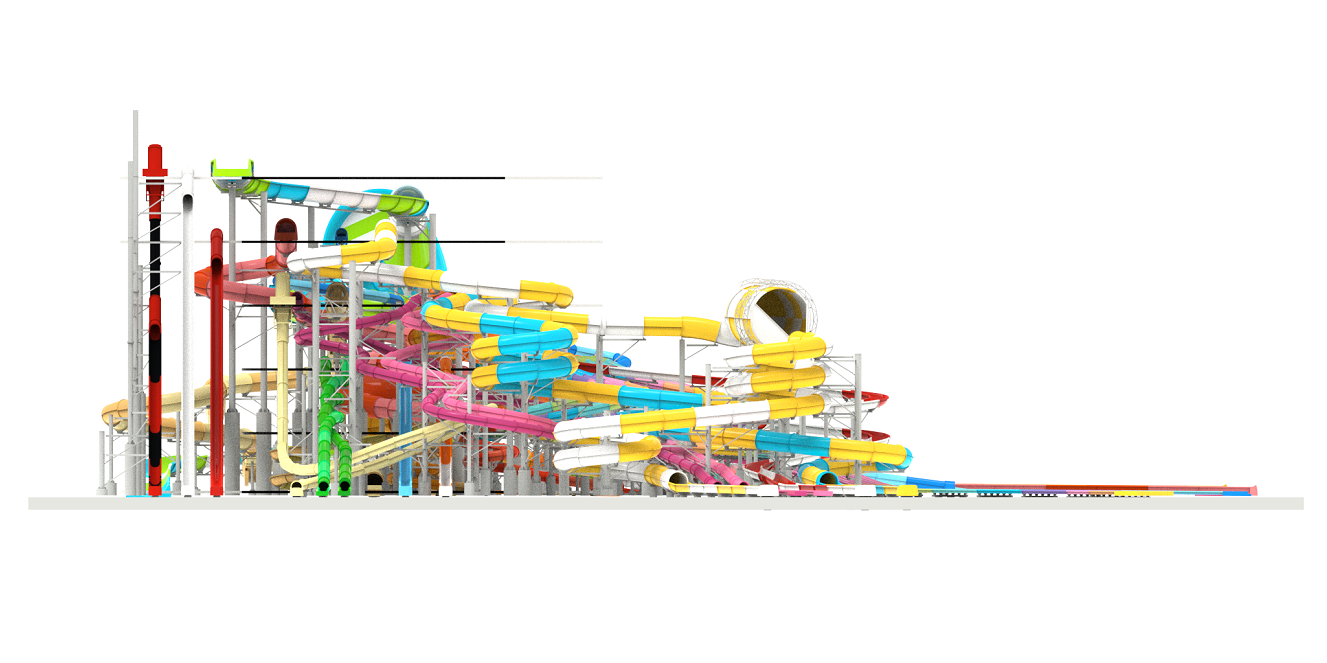
This comparative analysis addresses why material durability must govern procurement decisions for colorful water slide systems, with emphasis on lifecycle liability, maintenance regimes and user safety. Consider divergent supplier offers against a consistent specification for water slide construction so that differences in resin chemistry, surface finish and structural redundancy are visible at contract stage. The demand for predictable performance is not theoretical: operators of attractions such as Atlantis Aquaventure, Dubai, rely on long-term material performance to sustain throughput and to limit closure events.
Durability criteria: what to measure and why
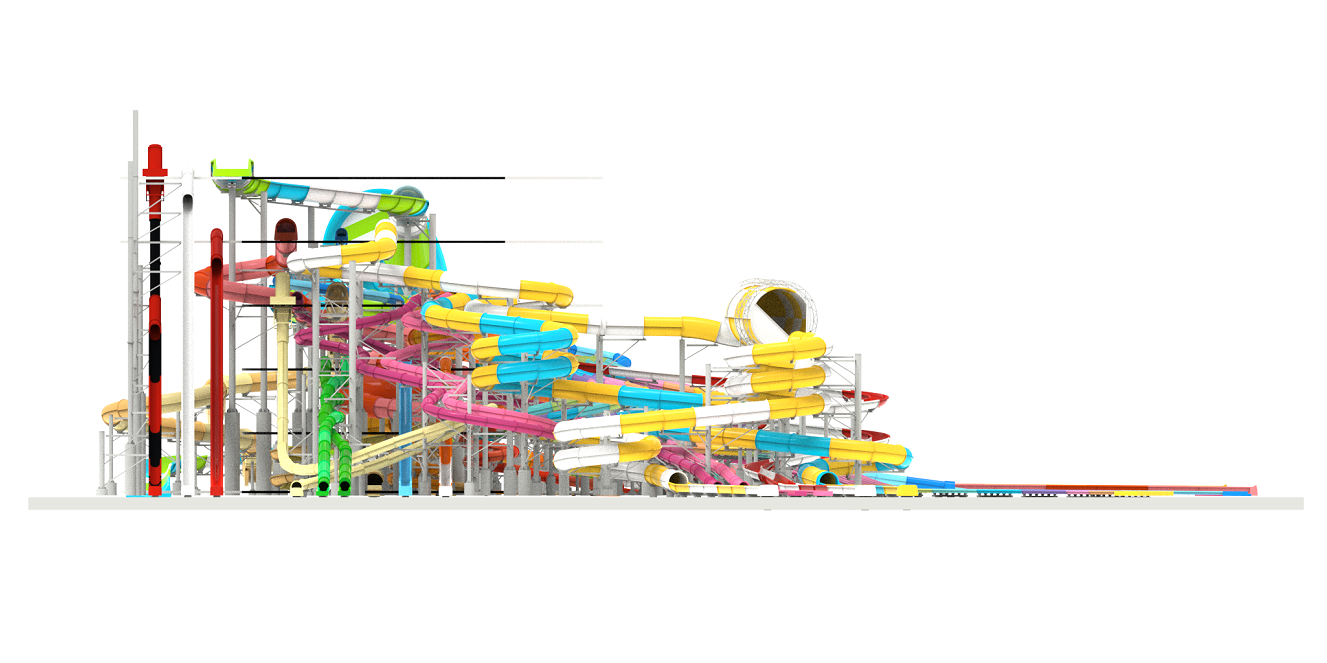
Durability for a slide product must be defined in contract language and measured empirically. Key parameters include UV-stabilization of polymer matrices, gelcoat adhesion and abrasion resistance, corrosion resistance for metallic supports, anti-slip surfacing longevity, and structural load-bearing capacity under dynamic live loads. Each parameter translates to a test metric and an acceptance threshold within procurement documents; absence of explicit metrics shifts risk to the purchaser.
Comparative vendor liabilities and sourcing trade-offs
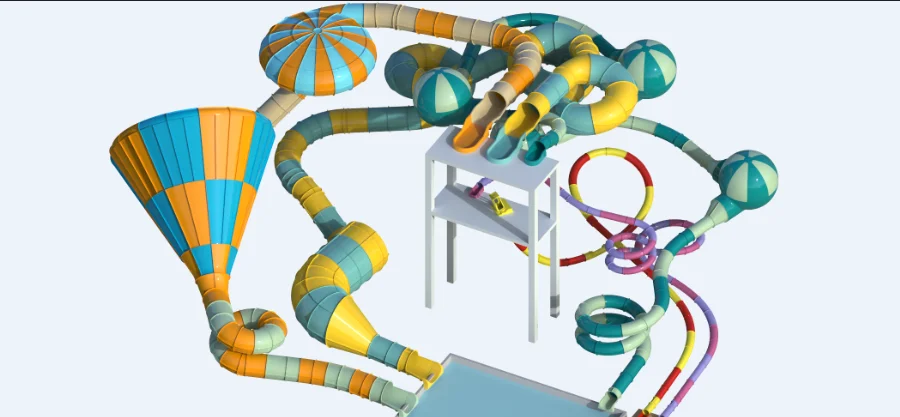
When comparing suppliers, analysis should not be limited to unit price. Evaluate warranty scope, failure-mode reporting, rectification lead times, and on-site support clauses. FRP components with enhanced gelcoat systems typically command premium pricing, but they reduce lifecycle interventions. Conversely, lower-cost thermoplastic slides may permit rapid replacement but increase operational downtime—this is a measurable trade-off in total cost of ownership. Vendors also differ in post-delivery testing regimes: proof-load tests, accelerated UV exposure cycles and salt-spray corrosion trials must be itemized within the contract.
Testing protocols and inspection checkpoints
Prescribe exact test procedures rather than reference titles. For example, specify UV exposure cycles of 1,000 hours at 340 nm with periodic gloss and colorimetric readings; require gelcoat adhesion maps taken at 10 mm intervals with a minimum pull-off strength; mandate fatigue testing cycles to simulate 20 years of expected rider throughput. Include acceptance criteria for anti-slip surfacing—coefficient of friction measurements under wet conditions at defined intervals—and hydraulics commissioning to validate flow rates against design benchmarks. These specifics avoid ambiguity during inspection and streamline dispute resolution.
Operational teardown and embedding keywords
Operational teardown documents must embed {main_keyword} and {variation_keyword} into the production and inspection workflow so traceability is preserved across procurement, manufacture and commissioning. Maintain bill-of-materials line items that reference polymer batch numbers, gelcoat lot IDs and fastener metallurgy. This level of recordkeeping reduces latent defect risk and clarifies liability allocation should warranty claims arise.
Common mistakes, alternatives and mitigation
Common procurement errors include accepting generalized material claims, omitting accelerated-weathering benchmarks, and failing to require field-repair procedures. Mitigation measures: (1) insist upon third-party witnessed tests; (2) require field spares and modular sections for rapid replacement; (3) codify rectification timelines in days rather than weeks. Vendors frequently propose cost-saving substitutions—optical color-matching at the expense of UV-stability is an example. —These substitutions have downstream consequences for maintenance budgets and user experience.
Decision matrix and recommended evidentiary checks
Construct a simple matrix that weighs capital cost, projected maintenance hours, downtime cost per hour, and documented test outcomes. Include columns for FRP resin type, gelcoat formulation, anti-slip system lifecycle, and corrosion mitigation strategy. Require the supplier to supply laboratory certificates for each referenced parameter and to permit site audits during production runs.
Advisory close: three golden rules for selection
1. Insist on quantified, test-based acceptance criteria tied to explicit warranty remedies. These metrics must be actionable and enforceable. 2. Prioritize materials and finishes that demonstrably reduce operational downtime—documented UV-stabilization and proven anti-slip performance are non-negotiable. 3. Allocate procurement weight to on-site support capacity and spare-part modularity; rapid rectification reduces total cost of ownership more than initial savings.
These directives culminate in a practical procurement posture: rigorous specifications, demonstrable test evidence, and contractual remedies that align supplier incentives with operational continuity. Dalang.