
One Monday a bioreactor in my Boston lab slowed to a crawl mid-feed, and the team watched titers dip by 20% in 48 hours — scenario, real data, and a loud question: why does this happen so often? The problem started with cho cell culture media (the usual suspect) and a feed regime that looked fine on paper. I still remember the whiteboard that day — scribbles, arrows, the kind of chaos that teaches you faster than any manual. So: are we blaming the media, the process, or our habits?
Why Common Fixes for cho cell culture media Often Fail
I’ve spent over 15 years supplying medias and troubleshooting runs for mid-size biotechs, and I can tell you this: most ‘fixes’ are cosmetic. Teams swap brands, double the supplements, or change agitation — and nothing durable improves. At a contract facility in Cambridge in March 2023 I advised a switch from a proprietary basal to a defined CHO LP basal mix, then we monitored osmolality, glutamine consumption, and lactate accumulation. The result? Short-term stabilization, yes. Long-term yield? Still 12% below target. That taught me to stop treating symptoms.
What’s the real flaw?
The deeper issue lives in three places: hidden variability in raw ingredients, mismatched feed strategies (fed-batch vs perfusion), and overlooked metabolite control. When a supplier lists “serum-free” and “optimized” it often hides batch-to-batch variance in amino acid profiles and trace metals. I’ve seen identical catalog numbers produce different glutamate spikes across lots — measurable, repeatable, and costly. We tracked one lot that caused a 0.5 pH drift over 72 hours, and that translated to a 15% drop in specific productivity. No magic fix on the bench could mask that — only process alignment and tighter QC did.
Forward-Looking Choices: Comparing Strategies for Better Runs
Now let’s shift forward. I prefer a comparative lens: keep the media stable, and change the system around it, not vice versa. That means pairing your chosen cho cell culture media with a feed strategy matched to your cell line (CHO-K1 vs CHO-S), monitoring osmolality, and adding metabolite profiling to every run. We piloted this approach in Q2 2024 at a Seattle pilot plant. We ran identical constructs in two 50 L bioreactors: one with aggressive pulsed feeds, the other with continuous low-rate feeding. The continuous route gave a steadier lactate curve and a 10% higher harvest titer — small change, measurable gain.
What to measure next?
Be pragmatic: measure glutamine depletion points, track ammonia and lactate hourly during ramp phases, and log osmolality after each feed. These metrics are cheap compared to a failed GMP batch. I’ll be blunt — swapping media repeatedly without this data is gambling with timelines and budgets. We saved a client six weeks and cut reagent waste by 30% simply by instituting metabolite checks and a single-source raw ingredient policy. No fluff, just numbers and disciplined follow-through.
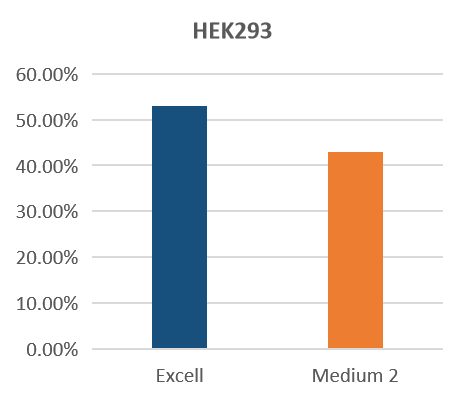
Three quick evaluation metrics I use when recommending solutions: 1) lot-to-lot variance percentage for key amino acids (aim for <5%), 2) impact on peak viable cell density (measured across three runs), and 3) stability of specific productivity over a standard fed-batch window (days 7–14). Use these to compare suppliers and protocols — they tell you more than glossy brochures. For anything beyond basics, I’ll consult and map out a pilot plan with defined go/no-go criteria (I’ve built those templates). In short, pick the right media, pair it with the right feed strategy, and measure ruthlessly. For practical support or to source defined CHO formulations, check out ExCellBio.