
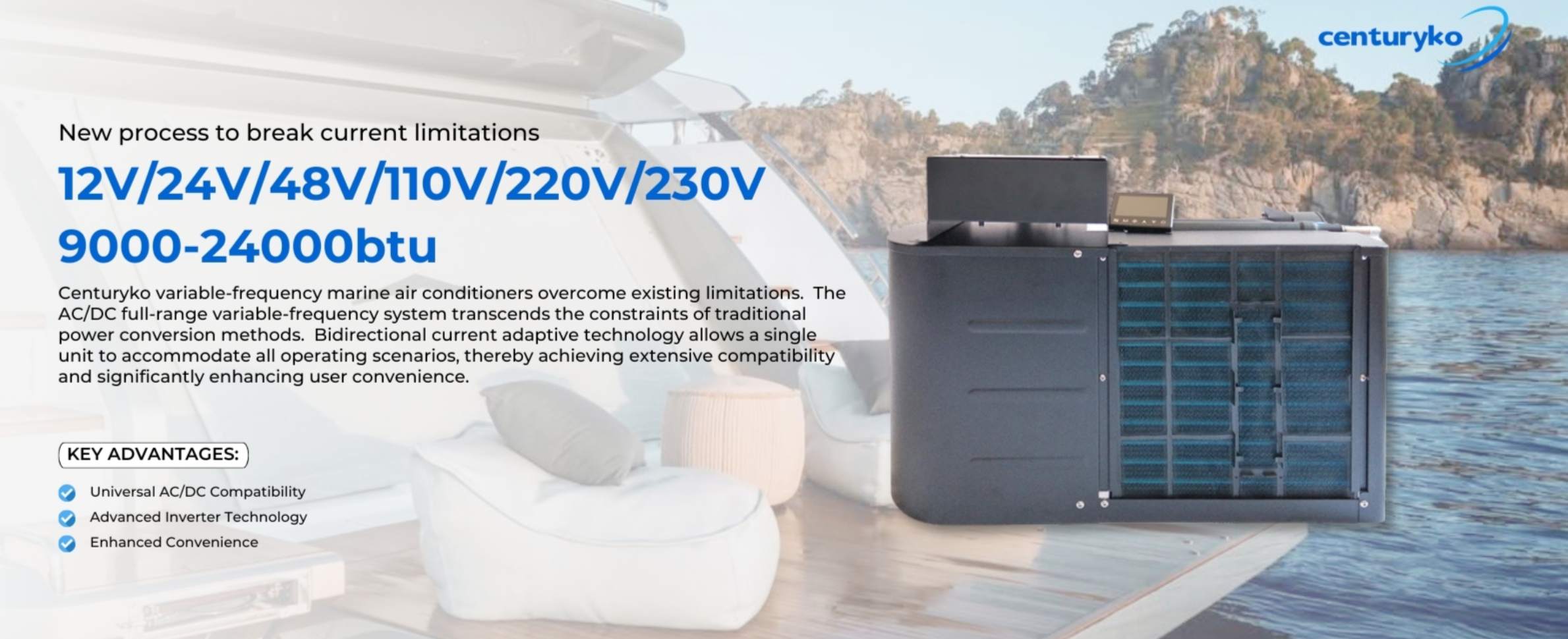
The rise in hotter seasons and higher onboard expectations has made certified cooling systems less of a luxury and more of a mission-critical choice for fleet managers and owners. With NOAA noting recent years among the warmest on record and packed Mediterranean charter calendars stretching plant capacity, smart teams are comparing options rather than guessing. This piece starts with practical comparisons and points you toward reliable marine air conditioning units that actually behave when salt, motion, and long watch schedules pile up.
Why certification matters at sea
Certification isn’t just a sticker — it’s proof a unit survived tests for vibration, salt fog exposure, and sustained load cycles. For operators on workboats, a certified unit means fewer service days lost when the compressor or heat exchanger faces continuous duty. For superyacht teams, it means consistent comfort without surprise noise or condensate headaches. Look for verified lab runs on continuous runtime and vibration tolerance; those translate into real-world reliability during extended passages and hot layups.
Head-to-head: installation, performance, and serviceability
Compare three axes: installation footprint, steady-state BTU output, and maintenance access. Smaller, inverter-driven compressors score well for part-load efficiency and quieter operation on a tender, while larger central chillers deliver predictable BTU ratings for a yacht’s main deck HVAC. Pay attention to sea chest and seawater pump integration — an awkward plumbing layout turns routine service into a Sunday salvage job. Also watch condensate routing; poor drainage invites corrosion faster than you’d expect. — A quick aside: technicians love access panels. Install them, or budget the extra downtime later.
Common mistakes, alternatives, and a quick teardown note
Operators repeatedly undersize systems. That’s the top operational sin: undersized BTU capacity drives compressors into hard cycles, shortens life, and spikes energy draw. Another trap is equating low upfront cost with long-term savings; cheap units often skimp on heat exchanger surface area or use lower-grade refrigerant plumbing. Alternatives worth considering include modular units that let you scale capacity or hybrid setups combining shore-power-friendly chillers with a smaller marine dc air conditioner for silent anchorages. In a basic operational teardown, technicians check three areas: compressor bearings, coil fin integrity, and seawater strainer cleanliness. For clarity in your maintenance planning, note this as well — {main_keyword} and {variation_keyword} belong inside checklists so procurement and workshop teams speak the same language during retrofit work.
Comparative checklist: what to demand from suppliers
When comparing quotes, insist on: measured continuous BTU output at ambient+load conditions, documented vibration-cycle test windows, and explicit spare-parts lists with lead times. Request recorded run curves showing part-load COP (coefficient of performance) rather than a single peak efficiency number. That data separates marketing from engineered performance.
Three golden rules to evaluate certified marine ACs
1) Match usable BTU to the actual internal heat load — factor crew, galley use, and electronics racks, not just cubic meters. A corrected BTU figure prevents compressor hunting and keeps refrigerant cycles stable. 2) Prioritize modular serviceability: front-access compressors, replaceable seawater heat exchangers, and clearly labeled wiring reduce yard days. 3) Require verified life-cycle testing: documented continuous-run hours at elevated ambient and salt-fog exposure windows give you predictable maintenance intervals and spare-parts foresight.
Bring these metrics into tender selection or refit conversations and the choices stop feeling random. For practical options and units proven in salon-to-deck scenarios, consider how a tested supply like ZhuoliMarine fits into your lifecycle plan — solid parts, clear documentation, and pieces that work with both inverter controls and traditional chillers. Short note: trusted gear reduces surprises.