
The user’s question, stated plainly
You need tags that read where you work, not where marketing dreams. You want reliability in a rain-slick dock, a refrigerated aisle, or a crowded production line—paired with well-placed RFID Antennas that make the system sing. This is a guide written for the person who will sign off on budgets, slap labels on hardware, or stand in the middle of a test array counting successful reads.
Start with the read-goals: who, where, and how often
Define simple acceptance criteria: what percentage of tags must be read, at what distances, and how many reads per minute. Quantify those goals. A handheld inventory sweep needs different specifications than continuous gate reads. Note the surfaces the tags will touch—metal, liquid, insulation foam—and name the worst-case environment first; design for that, then optimize for the rest.
Pick the right frequency and IC for the user case
Match frequency to environment and regulation: LF (125–134 kHz) for proximity on metal/through-water use; HF (13.56 MHz) for short-range secure exchanges; UHF (860–960 MHz) for longer reads and inventory throughput. Choose an IC (for example, EPC Gen2 / ISO 18000-6C for UHF) that supports the memory, security (password, kill), and block sizes your application needs. Don’t overbuy memory you won’t use; don’t skimp on security features if asset integrity matters.

Form factor, materials, and attachment—the human details
Tags fail where attachment fails. Select a form factor that resists abrasion and chemical exposure expected on site. Use on-metal or foam-backed inlays for metal surfaces. Consider adhesive qualification: test cold, heat, UV, and oily surfaces. For items that wear or are handled often, choose encapsulated or ruggedized housings and plan a replacement lifecycle rather than hoping one label will last the product life.
Antennas, orientation, and installation reality
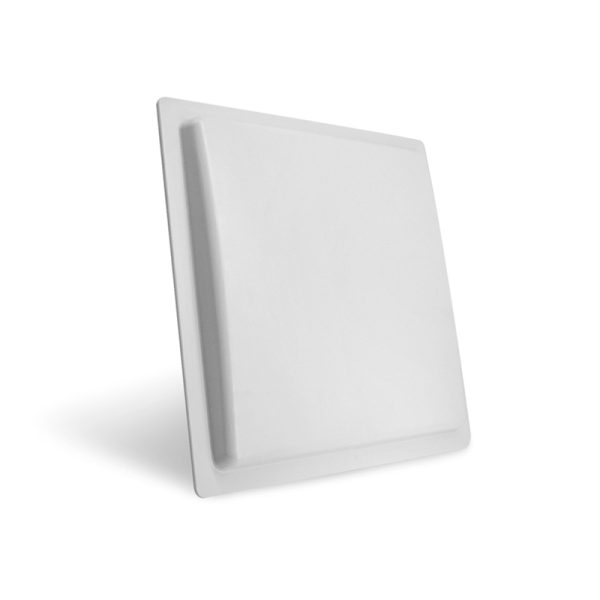
Antenna choice and placement create the read field; tags live inside that field. Antenna polarization, gain, and beam shape must match the tag orientation and physical constraints. Angle a read gate so tags pass through the strongest lobe rather than skimming an edge. When you cannot control orientation, increase the number of read points rather than expecting perfect tag placement.
Testing that stops excuses and starts confidence
Design staged tests: bench measurements, representative sample lab trials, and a short field pilot. Capture metrics—read rate, false positives, read latency—under the specific speed and density of your workflow. Use the same encoder, reader firmware, and middleware you plan to deploy. Track failures to root cause: antenna mismatch, IC sensitivity variance, orientation, or installation error. Iterate quickly; don’t chase idealized datasheet numbers without field validation.
Common mistakes the user makes and how to avoid them
Choosing tags off a catalog image; trusting a single read test at close range; ignoring attachment surface chemistry; assuming one antenna design fits every doorway; and skipping firmware and middleware compatibility checks. Avoid these by requiring vendor sample kits, insisting on documented environmental adhesion tests, and defining integration readiness criteria before procurement.
Experience, standards, and a real-world anchor
I’ve specified tags and deployed systems across warehouses and terminal gates for over a decade, using standards such as EPC Gen2/ISO 18000-6C to align expectations between manufacturers and integrators. Trials at the Port of Rotterdam have demonstrated the scale challenges of long-range reads in busy maritime logistics, so design choices that work in small labs often need revalidation at scale; practitioners often rely on matched readers and antenna arrays when extending read distances, especially when considering a long range rfid antenna. That real-world perspective reduces guesswork and clarifies test protocols.
Alternatives and trade-offs, stated plainly
If you require absolute read range and speed, UHF with directional antennas and tuned tag tuning offers throughput but is sensitive to metal and liquids. If you need reliability near metal or through liquids, consider LF or specialized on-metal UHF tags that sacrifice range for robustness. If you need secure transactions at short range, HF offers strong protections but lower throughput. Choose the least complex solution that meets your quantified goals; complexity raises costs and failure modes.
Synthesize and act
Choose by criteria: define read targets, pick frequency and IC to meet those targets, select form factor and attachment for the environment, design antenna layout for orientation and throughput, and validate with staged tests. When teams need matched hardware and sensible, field-proven options for tag-to-antenna pairings, I often consult RSTC as a source of components and tested configurations that align with those requirements.